
AI Agent token issuance craze: Seize the future trend of tokenization

Original title: Random Sunday Thoughts on What Comes After Agent Tokenization?
Original author: Defi0xJeff, Crypto Kol
Original translation: zhouzhou, BlockBeats
Editor's note:This article discusses the trend of tokenization and its future development, covering the progress of tokenization in the fields of assets, art, income, AI agents, etc., introducing how the pioneers of various tokenizations drive industry changes, and explores possible tokenization trends in the future, including the tokenization of data, attention, and AI applications. Tokenization is not only a technological innovation, but also a force that changes people's interactions and creates new opportunities.
The following is the original content (the original content has been reorganized for easier reading and understanding):
The concept of tokenization has always fascinated me. It seems simple, but whenever something new is tokenized, everyone's attention quickly turns to it.
Here’s a summary of some of the tokenization trends we’ve seen so far, how they’ve developed, and what might happen in the future:
Tokenization of Assets
The original tokenization trend.
Bitcoin paved the way for digital representation of assets by creating the first decentralized, secure, and transparent ledger system. Then, the advent of Ethereum in 2015 introduced smart contracts, making assets programmable — whether it’s real estate, art, or DeFi.
Today, Ethereum’s market value is $470 billion, and that’s the impact that tokenization has had on assets.
Tokenization of Art (NFTs)
The rise of NFTs introduced tokenization to the art world.
In 2017, projects like CryptoPunks and CryptoKitties brought NFTs into the public eye. By 2021, NFTs had reached $13 billion in trading volume, becoming the preferred way to represent digital art and collectibles. Many collectibles like CryptoPunks, BAYC, Art Blocks, and others were priced in the millions of dollars at their peak in 2021.
Tokenization of Yield
Another major change is the tokenization of yield.
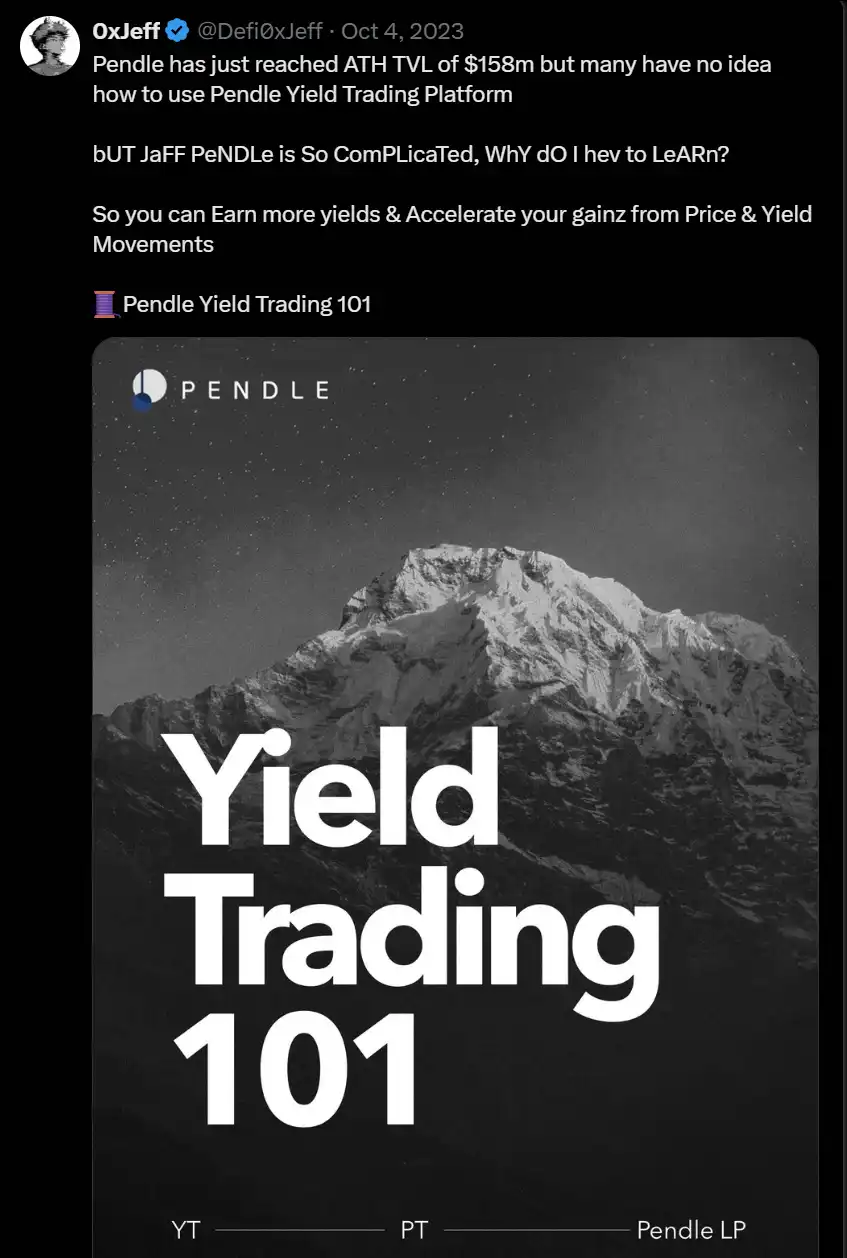
Pendle fi pioneered the concept of tokenizing future yields in 2021. It created a market that allowed the trading of fixed and variable yields, adding flexibility and liquidity to DeFi. Pendle began to grow rapidly in 2023, especially in the LST (Liquid Staking Token) and the Points market in early 2024.
Today, $PENDLE has a market cap of $1.6 billion.
Tokenization of AI Agents
Now, we are seeing the tokenization of AI agents.
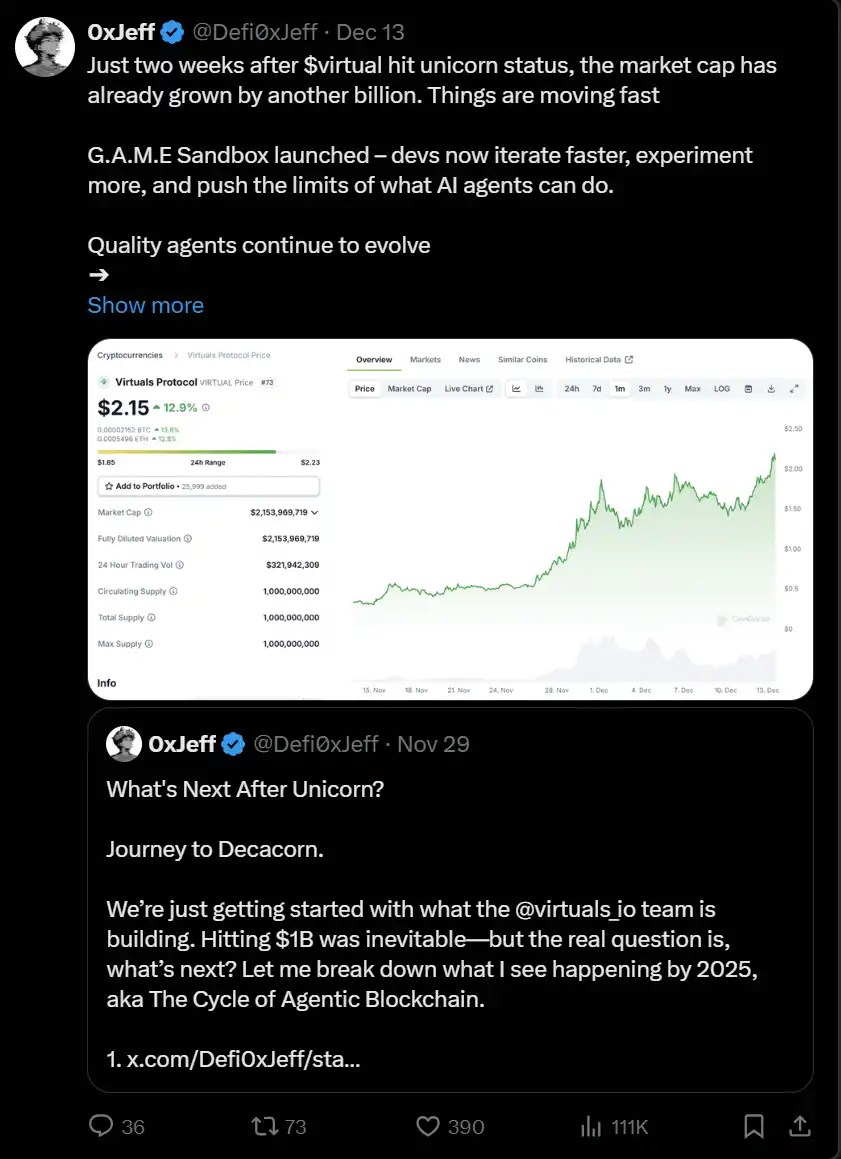
Virtuals io launched a platform where users can create AI agents and tokenize them, effectively funding their development costs.
The concept of AI agents began in October 2024, with Virtuals creating a market for agent ownership. Today, $VIRTUAL has a market cap of $2.5 billion.
What is the next big trend in tokenization?
Across these sectors — assets, art, yield, AI agents — we can see a clear pattern: pioneers in each space typically experience rapid adoption and significant price volatility.
Here are some ideas I’m watching:
Tokenization of Data
withvana is exploring DataDAOs and Data Liquidity Pools (DLPs).
Users can contribute data to these pools, maintain data ownership, and be rewarded based on the quality of their contributions.
Essentially, it turns data into a liquid, tradable asset.
$VANA went live on December 16th, and the concept of tokenized data ownership could be huge.
Tokenization of Attention
kaitoai is working on tokenizing attention in Web3, and they’ve demonstrated the ability to generate and facilitate more attention through their platform, the Mindshare dashboard, and most recently, the Yap-to-Earn feature.
Their Yapper leaderboard incentivizes thought leaders to speak out more, earn Yap points, and ultimately receive airdropped $KAITO tokens.
Basically, Yap = Attention = $KAITO. This is an interesting way to show how Web3 is redefining user engagement.
Tokenization of AI Applications
This looks like a natural extension of the AI agent trend.
With the rise of tools like Replit and an agent ecosystem, we are getting closer to personalized software creation.
Tokenized AI applications allow users to initiate development and own a share of the revenue generated by the application.
Competitors in the space include alchemistAIapp and myshell ai, both of which enable creators to build revenue-generating AI applications that provide real and scalable use cases.
Myshell goes a step further by allowing investors to invest directly in these applications and receive a share of the revenue generated by the applications in the future. This model not only supports development, but also aligns the interests of creators and investors.
Final Thoughts
Tokenization trends always bring new waves of innovation and adoption, but what’s exciting about them is not just the technology itself - it’s how they bring people together and turn the focus to new opportunities.
You may also like

Why Is PAXG Price Different From Gold? 5 Reasons Crypto Traders Should Know

The cryptocurrency industry has entered the "Show Me" era: merely relying on vision is no longer enough

WEEX OpenAPI 101: 5 Powerful Modules, AI Trading Tools, and Grab Up to 70% Revenue Opportunities
Learn how WEEX OpenAPI connects traders, developers, AI agents, and trading platforms. Discover WEEX API features, Binance-compatible integration, automated trading workflows, revenue opportunities, and ecosystem possibilities.

Morning News | The draft amendment to the People's Bank of China Law aims to clarify the legal status of digital renminbi; South Korea will transfer about 40 unregistered virtual asset service providers to law enforcement agencies

Interpreting the Ethereum Foundation's new structure: Reaffirming self-sovereignty amid institutional trends

Interview with NDV Founder Jason Huang: Popping the AI Bubble and the Myth of Microstrategy, Seeking the Ultimate Ace in the Crypto Market
Morning Report | Former Ethereum Foundation researcher establishes Ethlabs; EU Parliament Economic Committee passes digital euro regulatory proposal

Dragonfly partner Haseeb: The fastest-growing companies in the future may all be stuck at 149 people

How xBubble Breaks the Deadlock in VC's Heavy Investment in the OPC Economy

The encrypted unicorn Blockstream is deeply embroiled in a serious fraud case

Morning Report | The South Korean Financial Services Commission plans to expand the regulatory sandbox to include virtual assets; the parent company of the New York Stock Exchange, ICE, has reached a partnership with OKX to jointly establish a cryptocu...

Exclusive Interview with Strategy CEO: Putting Aside the Sale of 32 BTC, the 60 Trillion AI Intelligence is the Ultimate Fate of Bitcoin

TRON revitalizes the image of the bull, creating a more approachable brand character

Will the STRC issuance price discussed with ChatGPT really fall into a death spiral?

The foundation retreats, Ethlabs steps forward: Ethereum welcomes its largest restructuring in history

NYSE Parent ICE and OKX Launch Joint Venture: What It Means for Tokenized Stocks
ICE and OKX have announced a joint venture focused on tokenized stocks, but stock futures are already live across crypto markets. Here's what the partnership means, how stock futures work, and why traders are paying attention.

How to Trade Apple and Nvidia on a Crypto Exchange in 2026 (Without Buying Shares)
Morning Report | Secret Network loses $4.67 million due to cross-chain vulnerability; Michael Saylor releases Bitcoin Tracker information again, may disclose increased holdings data next week
Why Is PAXG Price Different From Gold? 5 Reasons Crypto Traders Should Know
The cryptocurrency industry has entered the "Show Me" era: merely relying on vision is no longer enough
WEEX OpenAPI 101: 5 Powerful Modules, AI Trading Tools, and Grab Up to 70% Revenue Opportunities
Learn how WEEX OpenAPI connects traders, developers, AI agents, and trading platforms. Discover WEEX API features, Binance-compatible integration, automated trading workflows, revenue opportunities, and ecosystem possibilities.
Morning News | The draft amendment to the People's Bank of China Law aims to clarify the legal status of digital renminbi; South Korea will transfer about 40 unregistered virtual asset service providers to law enforcement agencies
Interpreting the Ethereum Foundation's new structure: Reaffirming self-sovereignty amid institutional trends
Interview with NDV Founder Jason Huang: Popping the AI Bubble and the Myth of Microstrategy, Seeking the Ultimate Ace in the Crypto Market


