
Data Analysis: How has the Monad Testnet performed since its launch?



Original Title: Monad: Public Testnet
Original Author: Hess
Original Translation: Deep Tide TechFlow
The Monad testnet was officially launched on February 19th!
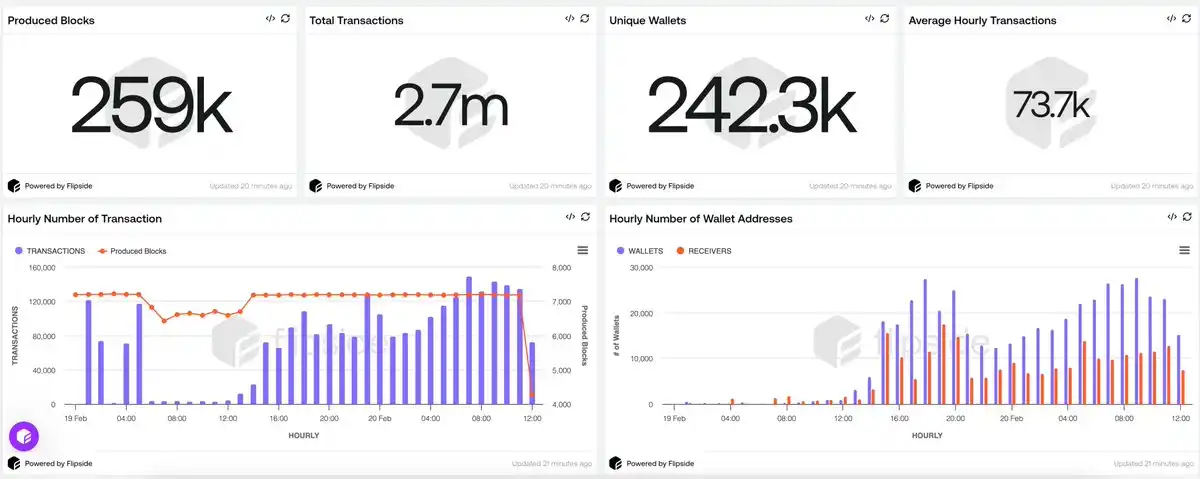
So far, the network has successfully processed nearly 2.7 million transactions, covering 242,300 unique addresses, with a transaction success rate of 98%, and a block generation time of just 0.5 seconds.
In the initial hours after launch, Monad ran smoothly and achieved peak performance of 3000 transactions per second (TPS).
Let's delve deeper into this project!

Before we proceed, you can check out detailed information through this link.
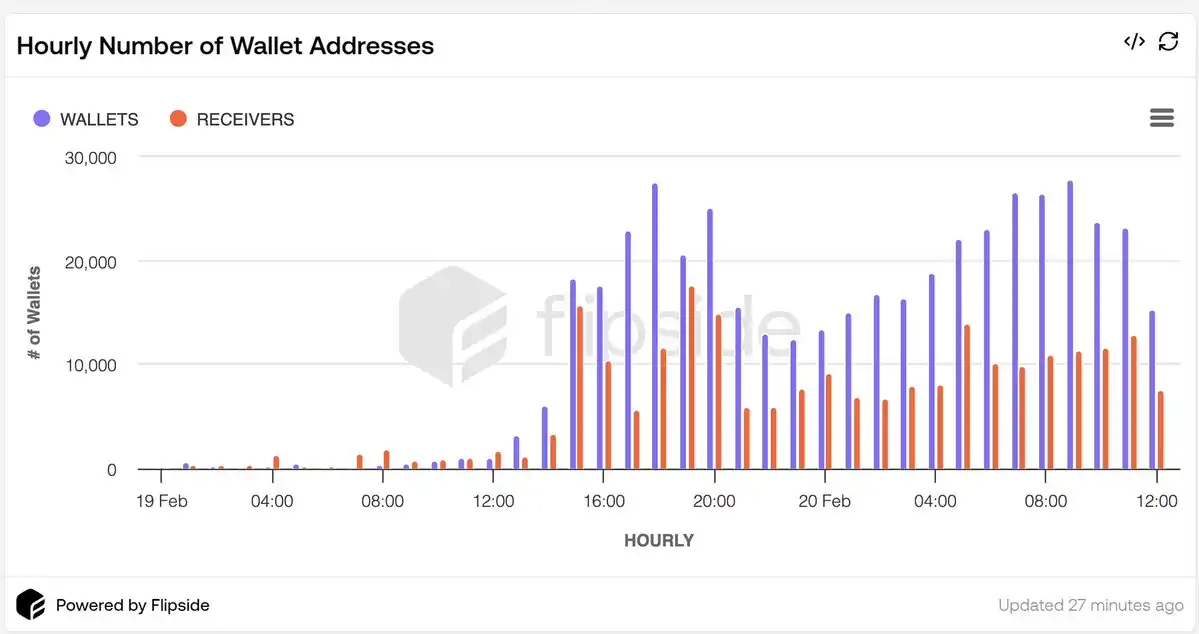
According to Monad's official data, they distributed testnet tokens to around 8.8 million active Ethereum addresses to attract more users to participate in testing and validate network performance.
In less than 24 hours, 3% of these addresses have completed their first transaction on the Monad network.
This ratio is rapidly increasing and is expected to reach 10% in a short time.
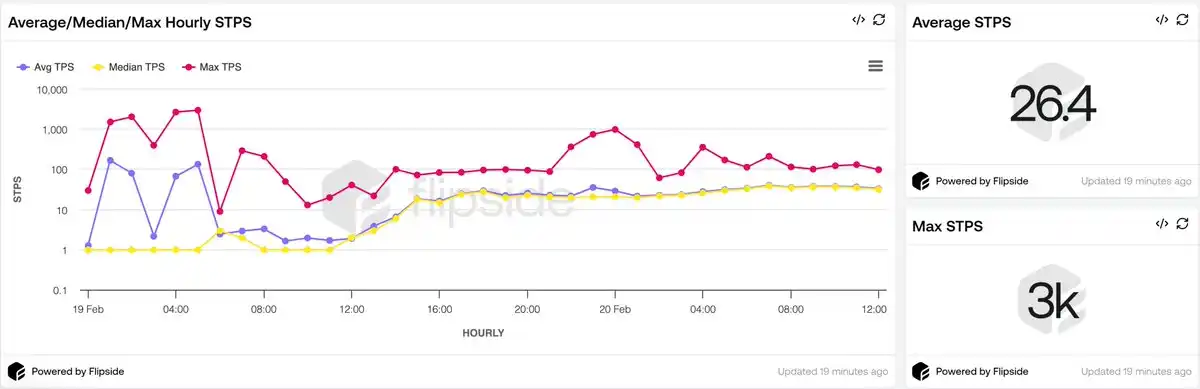
The large-scale distribution of testnet tokens has directly driven a significant increase in TPS.
Within just two hours of launch, Monad's average transactions per second (ATPS) reached a peak of 3000.
Currently, Monad's average ATPS is 26, a data point that better reflects the network's performance in daily operation.
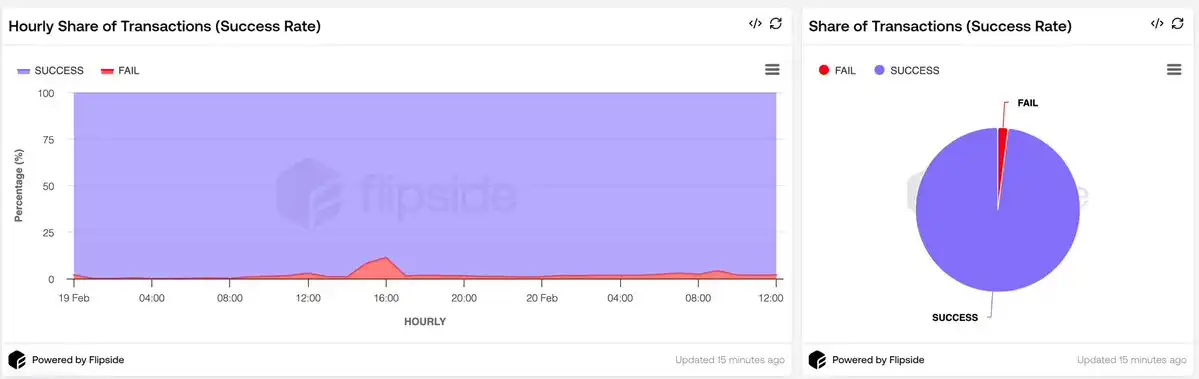
Monad's success rate has placed it among the top players in the blockchain field.
According to testnet data, Monad's transaction success rate is as high as 98%, an impressive performance.
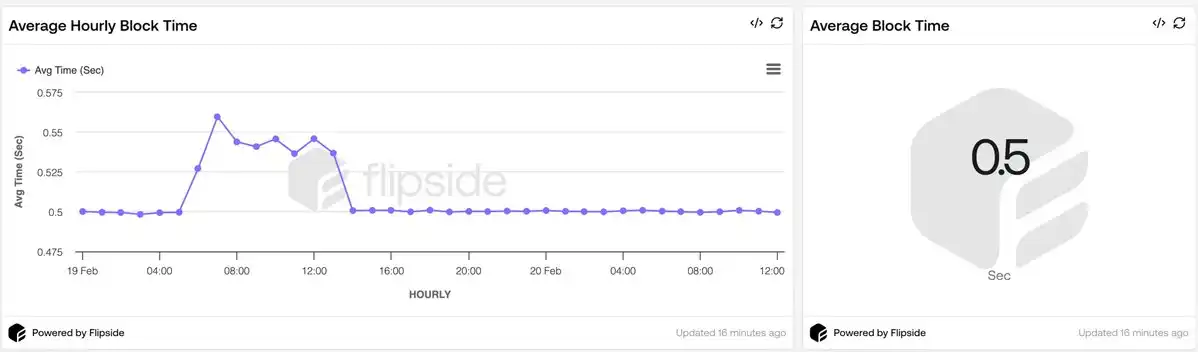
Block time has always been one of Monad's key optimization areas prior to launch.
Test data shows that Monad has an average block time of only 0.5 seconds, making it one of the fastest blockchains currently available, ideal for high-frequency trading and real-time applications.
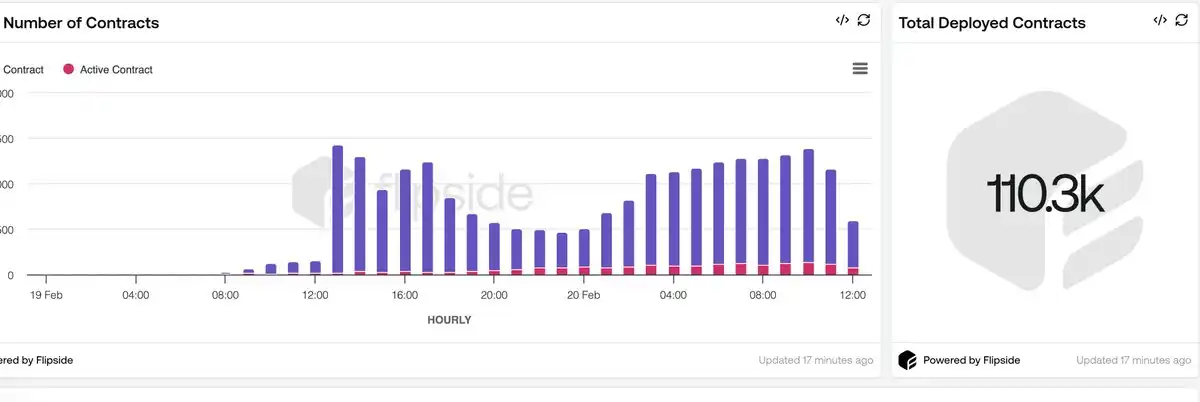
Since the launch of the testnet, Monad has deployed nearly 110,300 smart contracts.
An average of 5,000-6,000 contracts are added per hour, with the current number of active contracts at 500, demonstrating the network's robust activity.
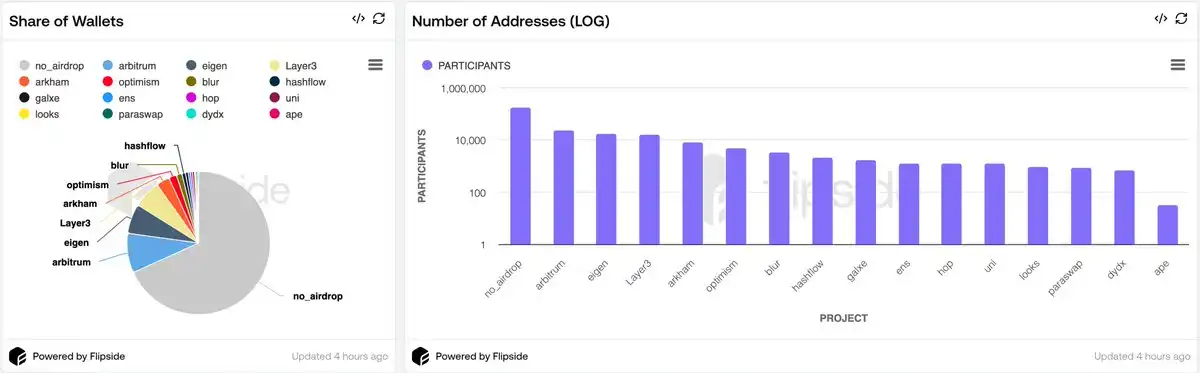
Notably, in addresses that conducted their first transaction on Monad, approximately 77% did not receive airdrops from other popular blockchains or platforms.
Among them, addresses for Airdrops from Arbitrum, Eigen, and Layer3 accounted for the largest proportion.
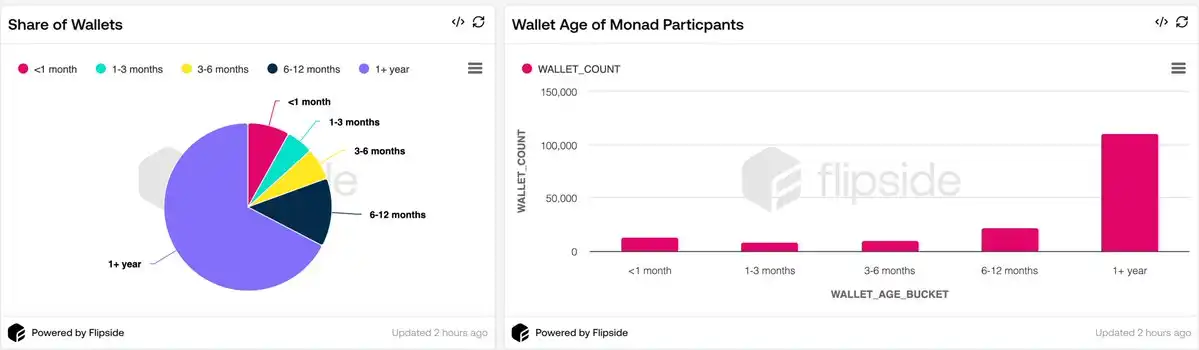
Based on first transaction data analysis of EVM on-chain addresses, 67% of addresses have been active for over a year, while 8% of addresses have been active for less than a month.
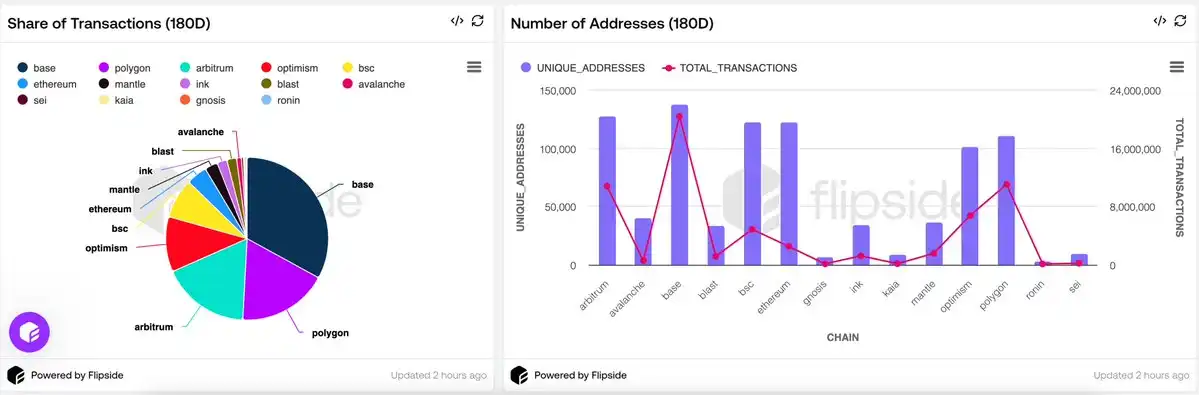
On which blockchains are Monad participants most active?
The data shows that over the past 6 months, Base, Polygon, and Arbitrum have become the top three blockchains where Monad participants are most active. These three chains have attracted a large number of users' attention and usage due to their high performance, low transaction costs, and rapidly growing ecosystems.
You may also like

Argentina vs Cape Verde: When a Record-Breaking Legend Meets an Unbreakable Underdog
WEEX exclusive pre-match analysis of Argentina vs Cape Verde, exploring Messi-led Argentina’s dominance and Cape Verde’s historic defensive breakout, with a breakdown of volatility, structure, and match dynamics.
How does Gate redo "buying and selling stocks" from the cryptocurrency world to the stock market?
Former ByteDance employee's account: How I started with two Pinduoduo hard drives and made six times the profit with Seagate to achieve financial freedom?
Visa and Mastercard join 140 giants to launch a new stablecoin, but the impact on the market landscape may still be limited
WEEX Launches Depth Chart for Spot Trading
MiCA reshuffle begins, Binance temporarily bids farewell to the EU
Raising interest rates to protect STRC and selling coins to maintain credit, this time the strategy has chosen the two most expensive paths
Morning Report | Samsung announces a 265.5 trillion won investment plan, focusing on semiconductor and AI computing power data centers; Vitalik publishes an article detailing the entire technology tree behind the confusion protocol (iO) mainline
In the era of AI, what is left of Bitcoin?
NeoSoul announced plans to integrate with the OKX Agentic Wallet, promoting AI agents' participation in the on-chain economy
Why Is Bitcoin Lagging Stocks in 2026? AI Stocks, ETF Outflows, and the Nasdaq Rally Explained
What you bought on CEX is really not US stocks: Analyzing the 94% liquidation monopoly and the evaporation of equity under a five-layer pipeline
In such a crowded cross-border payment arena, where is the next stop for the future?
Why Is Bitcoin Down in 2026? What We Can Learn From 2022
The large models in the United States are moving towards closure in the name of security
From the white-haired stock god to the billionaire fund mogul, the smart people shorting Nvidia are all getting rich using the same framework
Morning Report | CoinEx becomes a key hub for Iran to evade sanctions, involving over $3.8 billion in funds; Kalshi seeks a new round of financing, with a valuation potentially rising to $40 billion
Global Launch: As predictions become the most scarce asset in the AI era, Manadia is defining the next generation of the value internet
Argentina vs Cape Verde: When a Record-Breaking Legend Meets an Unbreakable Underdog
WEEX exclusive pre-match analysis of Argentina vs Cape Verde, exploring Messi-led Argentina’s dominance and Cape Verde’s historic defensive breakout, with a breakdown of volatility, structure, and match dynamics.
How does Gate redo "buying and selling stocks" from the cryptocurrency world to the stock market?
Former ByteDance employee's account: How I started with two Pinduoduo hard drives and made six times the profit with Seagate to achieve financial freedom?
Visa and Mastercard join 140 giants to launch a new stablecoin, but the impact on the market landscape may still be limited
WEEX Launches Depth Chart for Spot Trading
MiCA reshuffle begins, Binance temporarily bids farewell to the EU