
Is USDT's cross-chain version, USDT0, reliable?


Original Author: 0xTodd, Partner at Nothing Research
Wasn't Uni supposed to restart liquidity mining on 4.15? This time it involves 12 pools, many of which are related to $USDT0. So, I'll take this opportunity to talk about USDT0.
Firstly, What is USDT0?
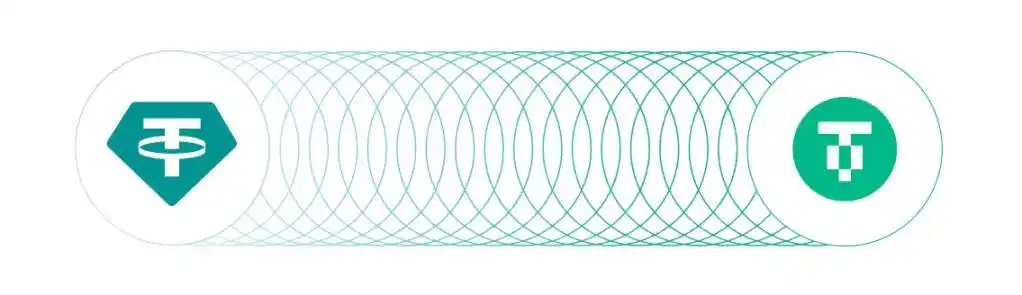
In simple terms, USDT0 is the cross-chain version of USDT. The parent asset USDT exists on ETH and, through Layer0, can cross-chain to other chains, becoming USDT0.
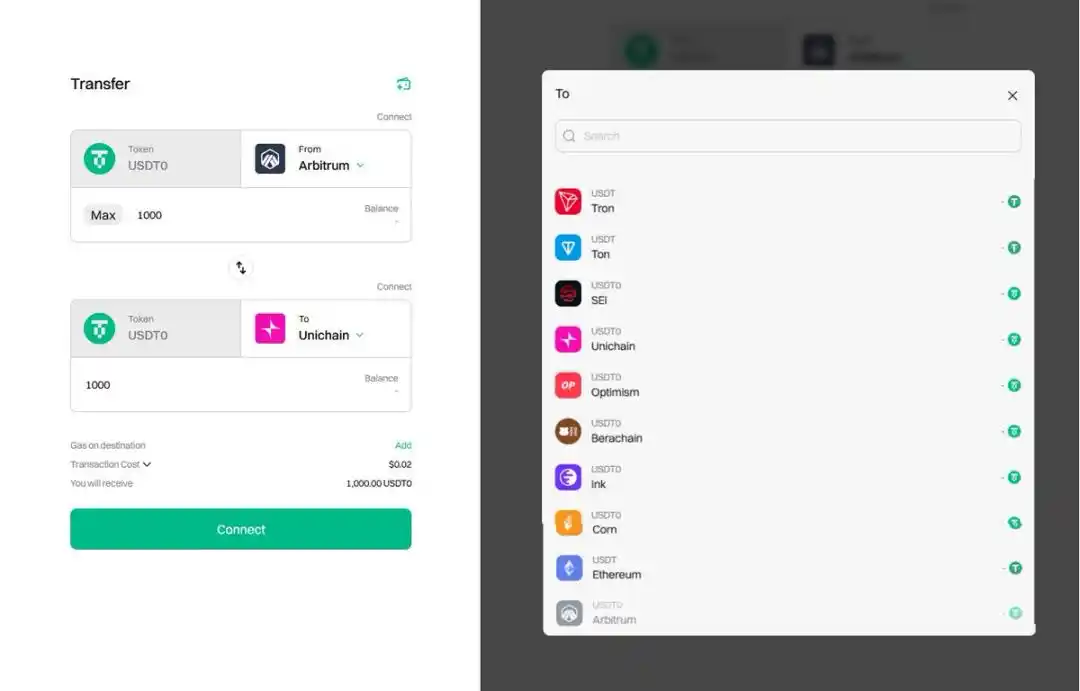
Supporters of USDT0 can also cross among themselves, for example, ETH-Arb-Unichain-BearChain-megaETH, and so on.
Who is Behind USDT0?
This is the most tricky part, and it took me a long time to figure it out.
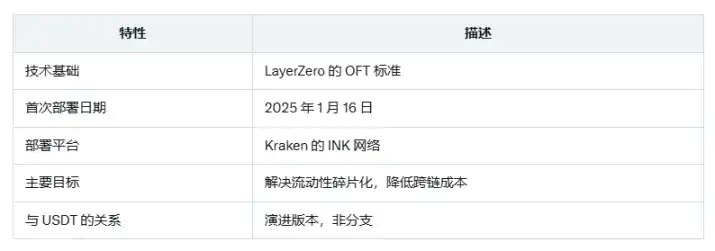
Behind this project, USDT0, is a collaboration of 1+3:
1. Led by Everdawn Labs;
2.1 Built on Layer0 technology;
2.2 Endorsed by Tether;
2.3 Endorsed by the INK public chain (issued by Kraken).
However, Everdawn Labs is a complete mystery online. I strongly suspect that it is a front for Tether. This is quite consistent with their style:
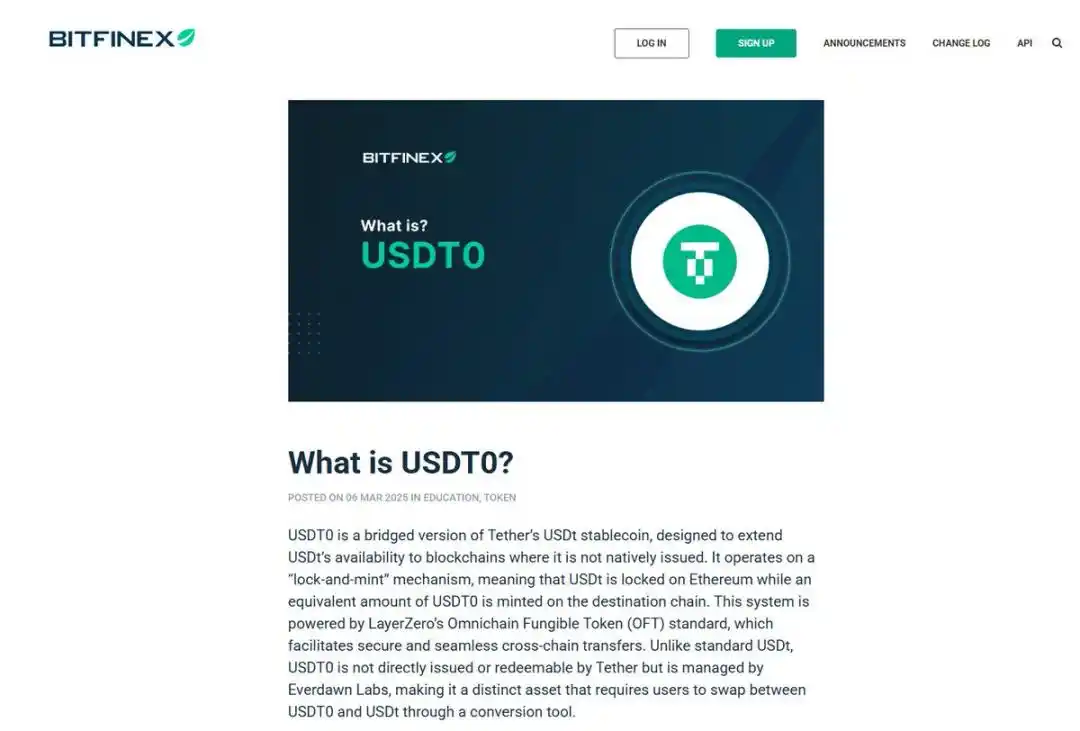
If nothing goes wrong—everyone benefits from the multi-chain convenience of USDT; if something goes wrong—then it's Everdawn Labs' fault, not Tether's. One reason for this speculation is that after the launch of USDT0 this year, the Tether team immediately expressed their support, followed by a dedicated article by Bitfinex. Without a strong relationship, they (BF and Tether) would not provide this kind of support.
What's the Evaluation?
In my opinion, if Tether is personally involved in this bridge, it's definitely a great move. This way, each chain's USDT can cross without loss, avoiding the need for various awkward third-party cross-chain bridges.
However, my level of trust in Layer0 is limited. In the past, there have been numerous high-profile cross-chain bridge failures, from multichain to thorchain. The technology behind cross-chain transactions is fundamentally simple, mainly relying on multi-signature setups. In the past, USDT used official bridges and did not utilize Layer0, a third-party bridge.
Official bridges are generally considered more secure, but they suffer from liquidity fragmentation. For example, if you want to move a large amount of capital from Arb to OP in a flash loan manner, you would need to first go back from Arb to ETH and then proceed to OP, which incurs additional costs for a faster transaction. PS: Not to mention chains like Sei, where even official bridge transactions incur fees for entry and exit.
On the other hand, if you opt for the USDT0 solution, Arb can directly move to OP in a flash and without loss. PS: Of course, there is a historical issue on OP where the USDT used is an older version of the ETH cross-chain version, while USDT0 represents the newer version. Thus, although theoretically viable to move funds from Arb to OP, in practice, it has been futile in the past. This is just an illustrative example.
New public chains, as they support USDT0 from the outset and lack historical issues, offer much higher usability. However, Tether itself is reluctant to directly engage in building this bridge and insists on sending a proxy like Everdawn Labs, which is a bit...
In the past, when I provided liquidity for $UNI on ETH, I only had to consider the minor third-party risks of Tether and Uniswap. Now, I have to bear an additional 4 risks: Everdawn going rogue, L0 going rogue, Unichain going rogue, USDT0 supporting other N chains, and each one potentially going rogue.
It sounds a bit overwhelming.
You may also like

A valuation of 8 billion dollars, doubling in 8 months! What makes the crypto-friendly bank Erebor Bank stand out?
340 billion valuation: Li Yanhong's largest IPO, a seat in Kunlunxin's shares is hard to come by
Stablecoins are the "royalists" of the crypto world: Open USD brings the old currency system into play
Cape Verde 2-3 Argentina: The Underdog Team That Stunned the World in Defeat
Cape Verde's run ended in a 3-2 defeat to Argentina, but their journey — three unbeaten draws, one heroic goalkeeper, and a fight that pushed the defending champions to the brink — is the kind of story markets recognize too: small caps can rattle blue chips long before anyone expects it.
Semiconductor stocks plummet, yet Anthropic wants to create a 2nm chip
Where is Zhao Changpeng's billion-dollar investment going? YZi Labs' investment landscape fully revealed
Ethereum Foundation Report: A Basic Guide to Ethereum for Governments and Financial Institutions
A pre-announced harvesting case: After the cryptocurrency price dropped by 99%, the public chain Saga exited to transform into AI
When American giants collectively "defect" from Chinese AI models
BIS Report Compliance Observation: The Real Risks of Stablecoins, Not Just "Depegging"
Portugal 2-1 Croatia: Ronaldo's 20-Year Knockout-Stage Drought Ends With a Debt Finally Collected
Portugal beat Croatia 2-1 in the 2026 global football championship's knockout rounds as Ronaldo scored his first-ever knockout-stage goal, Gonçalo Ramos struck a stoppage-time winner, and VAR ruled out a late equalizer for offside.
Bitcoin Price Prediction July 2026: Will BTC Recover to $70K or Drop Below $55K?
A South Korean company that learned the strategy of hoarding coins, from a bull market to delisting?
WEEX API Broker Program: Turn Your Trading Platform Into a Revenue Engine
How to choose between buying discounted ETH, Bitmine, and SharpLink?
Wosh: Inflation has cooled in recent weeks, AI is reshaping the economy, and forward guidance has lost its necessity
From Pump.fun to Collector Crypt: Has Solana's income throne changed hands?
Dan Bin's latest speech: Don't miss out on a great era
A valuation of 8 billion dollars, doubling in 8 months! What makes the crypto-friendly bank Erebor Bank stand out?
340 billion valuation: Li Yanhong's largest IPO, a seat in Kunlunxin's shares is hard to come by
Stablecoins are the "royalists" of the crypto world: Open USD brings the old currency system into play
Cape Verde 2-3 Argentina: The Underdog Team That Stunned the World in Defeat
Cape Verde's run ended in a 3-2 defeat to Argentina, but their journey — three unbeaten draws, one heroic goalkeeper, and a fight that pushed the defending champions to the brink — is the kind of story markets recognize too: small caps can rattle blue chips long before anyone expects it.
Semiconductor stocks plummet, yet Anthropic wants to create a 2nm chip
Where is Zhao Changpeng's billion-dollar investment going? YZi Labs' investment landscape fully revealed