
Pump.fun Flips the Table? Self-Custody AMM Pool Breaks Free from Raydium's Restraints


Original Title: "Pump.fun Building Its Own AMM Pool? Revealing the Heart of Raiding Raydium's Profits"
Original Source: DeepTech TechFlow
“For to everyone who has, more will be given, and he will have an abundance; but from him who does not have, even what he has will be taken away.” --- Matthew
On-chain, the Matthew effect of the strong getting stronger has never stopped.
For example, Pump.fun has quietly started to target Raydium's profits: today, it stealthily launched its own AMM pool, attempting to siphon off the liquidity revenue that originally belonged to Raydium.
Currently, this custom AMM (http://amm.pump.fun) page appears very simple, where you can swap any token just like other DeFi products.
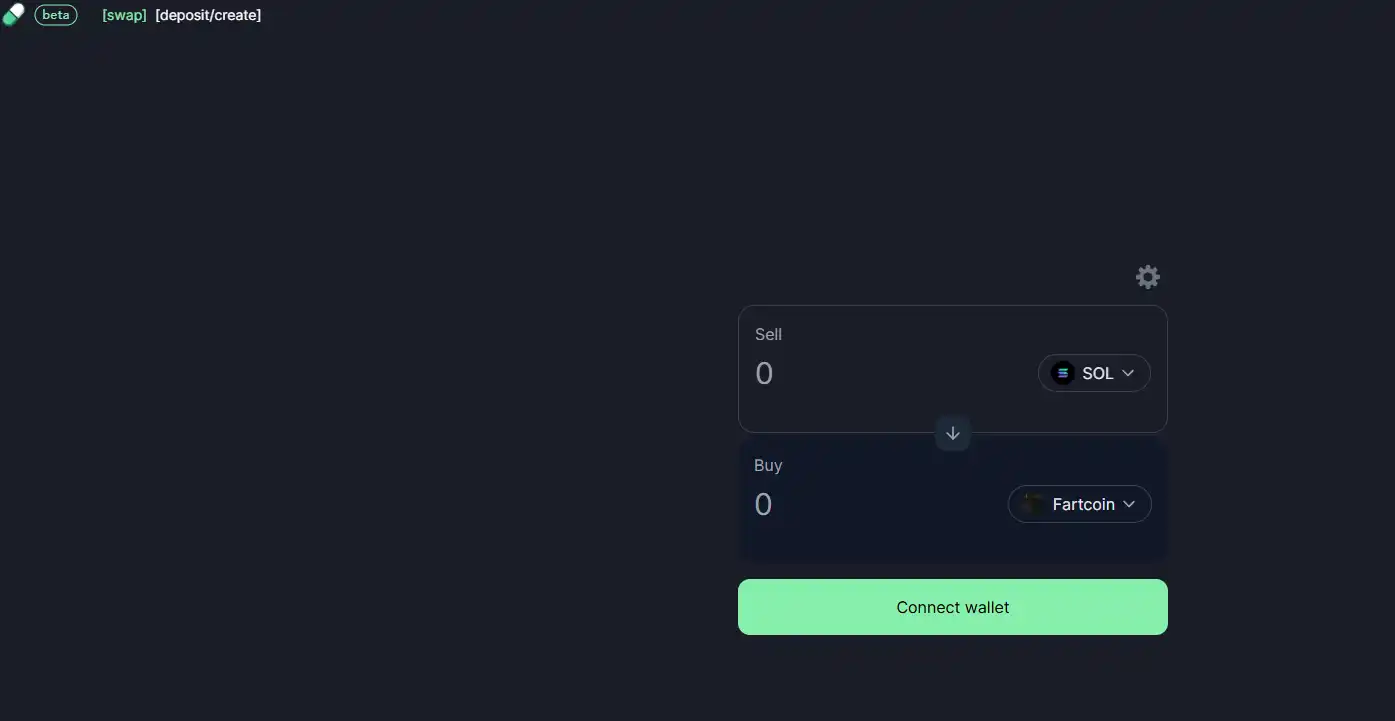
However, the intention behind this product may not be straightforward.
Everyone knows that Pump.fun has attracted a large number of Degens with its unique on-chain/off-chain mechanism and memecoin culture.
Users' trades first match within Pump.fun's on-chain pool, relying on the platform's liquidity to complete the transaction; once the on-chain pool is filled, trades are routed to the off-chain pool, which actually relies on Raydium's liquidity pool.
In this model, Pump.fun has always been a "flow provider" for Raydium, but is also constrained by Raydium's rules. Whenever trades flow to the off-chain pool, Pump.fun needs to pay a portion of the trading fees, and this profit ultimately flows to Raydium's liquidity providers (LPs).
Raydium itself is one of the most important AMM platforms in the Solana ecosystem, and a key infrastructure for DeFi users to access liquidity. It also provides liquidity pool services for many projects on Solana, with its TVL (Total Value Locked) consistently ranking at the top of Solana.
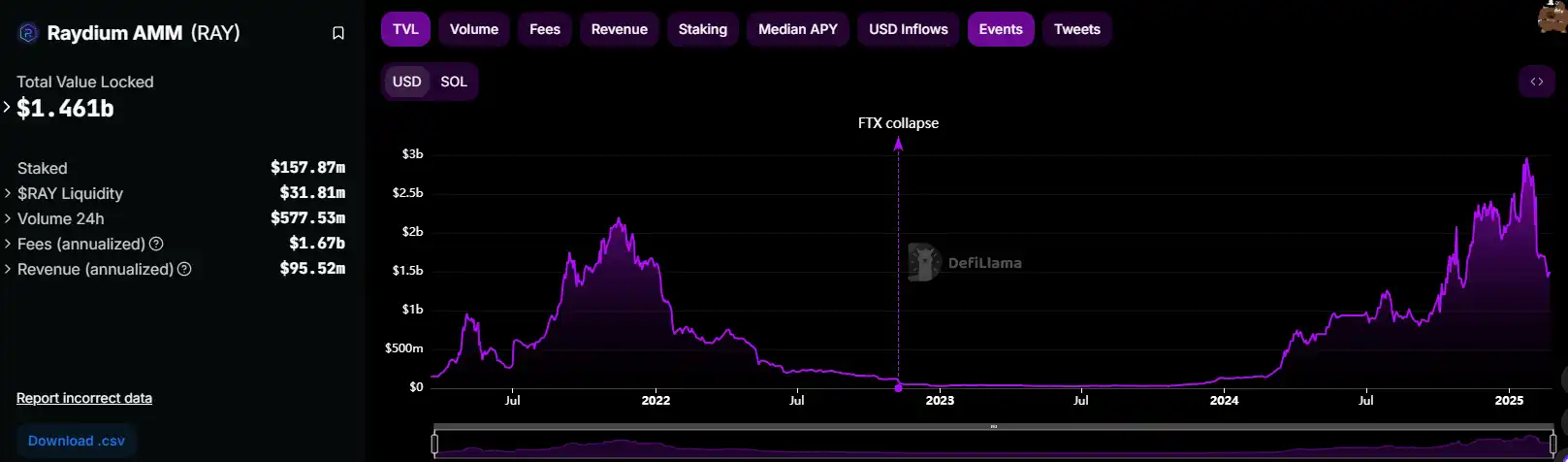
As the "liquidity hub" of Solana, Raydium holds a pivotal position in the ecosystem. However, Pump.fun's new move is challenging this status quo:
Pump.fun is no longer satisfied with being a mere "liquidity provider" for Raydium, but is attempting to become the liquidity "controller."
The Business Behind Building An AMM Pool
By building its own AMM, Pump.fun can transfer liquidity from Raydium to its own platform, thereby fully controlling the distribution of trading fees.
If Pump.fun's strategy succeeds, Raydium will not only lose a portion of its liquidity source but also face impact on its revenue model and ecosystem status.
So, how does the math work out for this situation?
1. Raydium's Revenue Model: Pump.fun's "Hidden Cost"
Under the current model, Pump.fun's off-chain trades rely on Raydium's liquidity pool, and each trade incurs a certain fee, with these fees ultimately flowing into Raydium's ecosystem.
Raydium's Standard Fee: A transaction fee of 0.25% is charged per trade, where:
· 0.22% is allocated to Raydium's liquidity providers (LPs).
· 0.03% is used for $RAY buyback and ecosystem support.
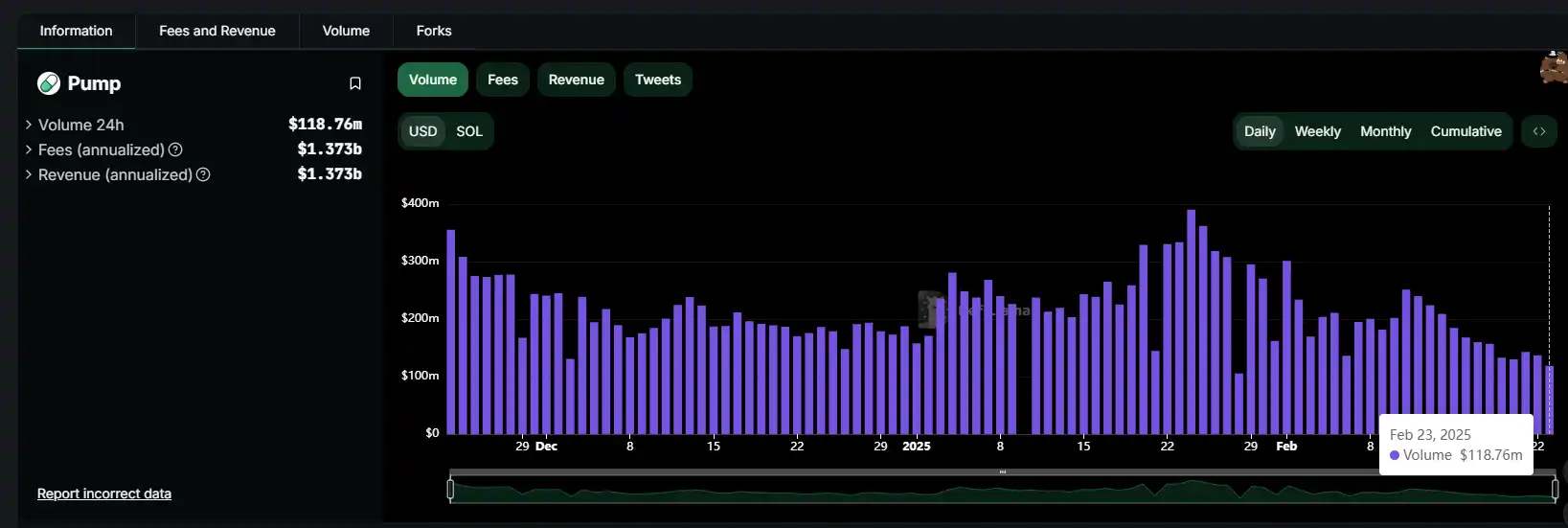
Pump.fun's Trading Volume: Assuming Pump.fun's daily trading volume is $100 million, of which 5% (approximately $5 million) is routed to Raydium's off-chain.
Pump.fun's Hidden Cost: Calculated at 0.25% fee, Pump.fun needs to pay Raydium $12,500 per day, approximately $4.5625 million annually.
For a rapidly growing platform, while this fee has decreased compared to before, it still represents a reliance on an external platform.
2. Potential Benefits of Building an AMM
By building its own AMM, Pump.fun can transfer the off-chain liquidity from Raydium to its own platform, thereby having full control over the allocation of transaction fees. So, how much potential benefit can this strategic move bring?
· New Revenue Model: Assuming Pump.fun's self-built AMM fee structure is the same as Raydium's (0.25%), but all fees are owned by the platform:
The daily off-chain trading volume remains at $5 million.
Calculating based on a 0.25% fee, Pump.fun can directly earn $12,500 in daily revenue.
The annual cumulative revenue is approximately $4,562,500.
· Net Earnings After LP Costs: If Pump.fun's AMM does not rely on external LP but is provided by the platform itself, this income will be entirely owned by the platform, without the need to distribute it to other liquidity providers.
3. Besides Money, What Else Does Pump.fun Value?
Building an AMM not only brings a direct increase in revenue but also significantly enhances Pump.fun's control over the ecosystem, laying the foundation for future development.
In the current model, Pump.fun's off-chain transactions rely on Raydium's liquidity pool, which means Raydium controls the user trading experience and liquidity stability.
After building its own AMM, Pump.fun will have full control over the liquidity pool rules and fee distribution, thus enhancing control over users.
By controlling liquidity, Pump.fun can further introduce more DeFi products (such as perpetual contracts, lending protocols, etc.) to build a closed-loop ecosystem.
For example, Pump.fun can facilitate the issuance and trading of memecoins through its AMM pool, providing more gameplay for its community.
Related Token Price Changes
Following Pump.fun's announcement of its self-built AMM, Raydium's token $RAY experienced a swift decline, with a current daily decline of 20%.
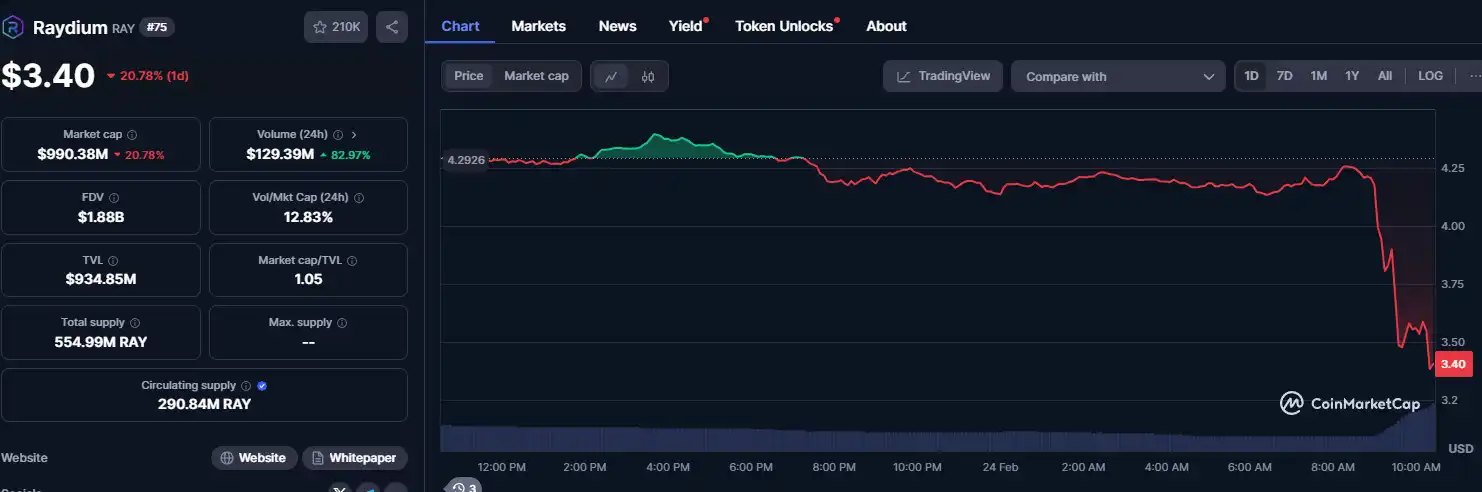
This phenomenon may reflect the market's concerns about its future revenue and position.
Pump.fun's strategy may pose a long-term threat to Raydium, especially in terms of liquidity migration and fee income.
On the flip side, following Pump.fun's self-built AMM pool launch, the price of a MEME test token Crack quickly surged, with a peak market cap reaching $4 million.
CA: CitRGsrgU7NjaXsxdMFc7sfsxtSnPdtkhHJqbPvhpump
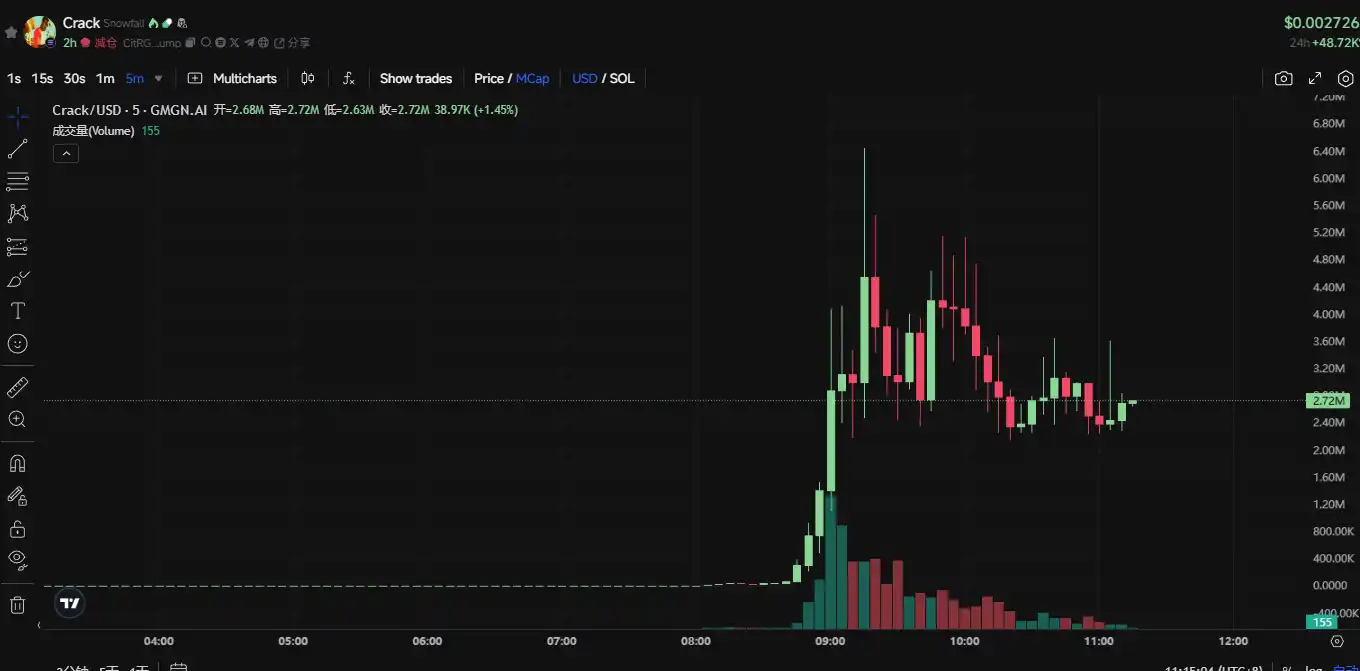
In a few market hotspots, the test tokens of AMM pools may continue to soar for a while.
Revealing the Heart of the Challenge
Post self-built AMM, if operations run smoothly, Pump.fun will have full control over off-chain liquidity, significantly boosting revenue.
By integrating on-chain and off-chain liquidity, Pump.fun can build a fully self-consistent on-chain Meme DeFi ecosystem.
From capturing attention flow to seizing capital destinations, Pump.fun is evidently transitioning from "relying on external liquidity" to "owning liquidity."
Once an innovative platform gains a larger user base, it naturally has the opportunity to disrupt traditional DeFi's position and the on-chain ecosystem layout through strategic adjustments.
However, whether Pump.fun can truly shake Raydium's position in the future will depend on its liquidity strategy, user growth balance, and most importantly, whether the bull market is still here.
Timing and luck.
Not only are the “leeks” engaging in PVP, but also projects are engaging in fierce competition against each other.
You may also like

Argentina vs Cape Verde: When a Record-Breaking Legend Meets an Unbreakable Underdog
WEEX exclusive pre-match analysis of Argentina vs Cape Verde, exploring Messi-led Argentina’s dominance and Cape Verde’s historic defensive breakout, with a breakdown of volatility, structure, and match dynamics.
How does Gate redo "buying and selling stocks" from the cryptocurrency world to the stock market?
Former ByteDance employee's account: How I started with two Pinduoduo hard drives and made six times the profit with Seagate to achieve financial freedom?
Visa and Mastercard join 140 giants to launch a new stablecoin, but the impact on the market landscape may still be limited
WEEX Launches Depth Chart for Spot Trading
MiCA reshuffle begins, Binance temporarily bids farewell to the EU
Raising interest rates to protect STRC and selling coins to maintain credit, this time the strategy has chosen the two most expensive paths
Morning Report | Samsung announces a 265.5 trillion won investment plan, focusing on semiconductor and AI computing power data centers; Vitalik publishes an article detailing the entire technology tree behind the confusion protocol (iO) mainline
In the era of AI, what is left of Bitcoin?
NeoSoul announced plans to integrate with the OKX Agentic Wallet, promoting AI agents' participation in the on-chain economy
Why Is Bitcoin Lagging Stocks in 2026? AI Stocks, ETF Outflows, and the Nasdaq Rally Explained
What you bought on CEX is really not US stocks: Analyzing the 94% liquidation monopoly and the evaporation of equity under a five-layer pipeline
In such a crowded cross-border payment arena, where is the next stop for the future?
Why Is Bitcoin Down in 2026? What We Can Learn From 2022
The large models in the United States are moving towards closure in the name of security
From the white-haired stock god to the billionaire fund mogul, the smart people shorting Nvidia are all getting rich using the same framework
Morning Report | CoinEx becomes a key hub for Iran to evade sanctions, involving over $3.8 billion in funds; Kalshi seeks a new round of financing, with a valuation potentially rising to $40 billion
Global Launch: As predictions become the most scarce asset in the AI era, Manadia is defining the next generation of the value internet
Argentina vs Cape Verde: When a Record-Breaking Legend Meets an Unbreakable Underdog
WEEX exclusive pre-match analysis of Argentina vs Cape Verde, exploring Messi-led Argentina’s dominance and Cape Verde’s historic defensive breakout, with a breakdown of volatility, structure, and match dynamics.
How does Gate redo "buying and selling stocks" from the cryptocurrency world to the stock market?
Former ByteDance employee's account: How I started with two Pinduoduo hard drives and made six times the profit with Seagate to achieve financial freedom?
Visa and Mastercard join 140 giants to launch a new stablecoin, but the impact on the market landscape may still be limited
WEEX Launches Depth Chart for Spot Trading
MiCA reshuffle begins, Binance temporarily bids farewell to the EU


