
The US SEC's move towards Coinbase illustrates the regulatory gap in the cryptocurrency space.


Original Article Title: SEC's Coinbase Move Signals Regulatory Vacuum for Crypto
Original Article Author: Yueqi Yang, The Information
Original Article Translation: Block unicorn
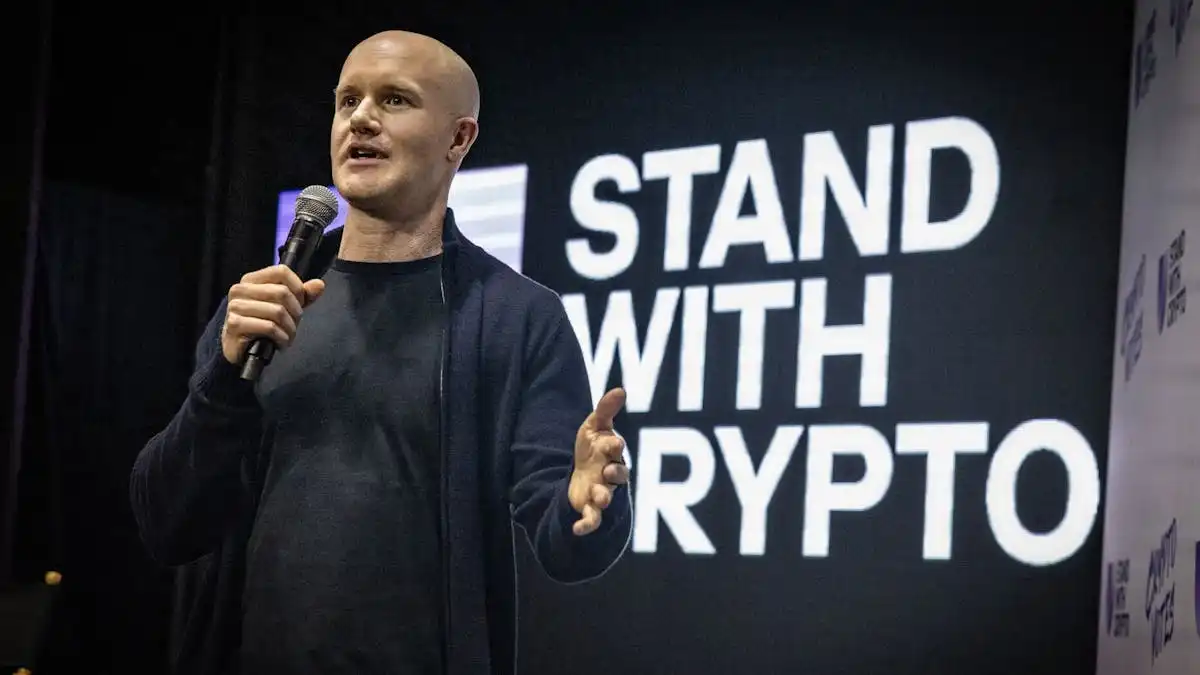
Welcome to the official beginning of the cryptocurrency regulatory vacuum. This is where we find ourselves now as Coinbase, the United States' largest cryptocurrency exchange, has indicated it has reached an agreement with the Securities and Exchange Commission (SEC) staff to dismiss the lawsuit alleging the company operated an unregistered securities exchange (at least that's what Coinbase is saying—we'll have to wait for confirmation from the SEC after a commission vote).
Last Friday morning US time, Coinbase's stock rose 2.2%. This news marked a significant development for the cryptocurrency industry in terms of regulatory progress, especially as the SEC's decision to drop its long-running lawsuit against Coinbase seemed to usher in a regulatory vacuum for the cryptocurrency industry. Coinbase CEO Brian Armstrong stated in a post on X that the dismissal means Coinbase will not pay any fines, will not have to make any changes to its operations, and added that the company has spent around $50 million litigating the case.
It appears that a top financial regulatory agency is pausing the enforcement of decade-old securities rules related to cryptocurrency as it awaits new rules to be set by Congress—if Congress can pass any rules at all. And these congressional deliberations are likely to take some time. Essentially, cryptocurrency companies have been promised regulatory exemptions while Trump's cryptocurrency task force tries to figure out the industry's next steps.
While all of this may sound optimistic for the cryptocurrency industry, things are not all sunshine and rainbows. Today we have seen some reminders of the risks facing the cryptocurrency space: just two hours after Coinbase shared its good news, Bybit, the world's third-largest cryptocurrency exchange, confirmed it had been hit by a hack of over $1 billion, making it the largest hack in cryptocurrency history.
During such hacks, panicked investors may mass withdraw their funds, and if an exchange doesn't have enough funds to cover withdrawal requests, it could deal a fatal blow to the exchange. Currently, Bybit CEO Ben Zhou has stated that the exchange holds enough funds to cover the hacked amount and is still processing withdrawals normally. Nevertheless, both Bitcoin and Ethereum prices have subsequently dropped, and while Coinbase's stock initially rose after news of the SEC's action in the morning, it fell by 8% in afternoon trading.
This situation may take days or even weeks to clarify before any chain reaction becomes apparent. This hack not only exposed the inherent risks of cryptocurrency but also demonstrated that traditional financial institutions' current security measures can protect them from cryptocurrency risks. For those still under the strict scrutiny of the SEC and federal banking regulators, such as banks and traditional stock exchanges, this is somewhat reassuring.
These companies have long argued that the cryptocurrency industry currently has an unfair advantage in terms of regulation. For example, Nasdaq complained earlier this month during a meeting with a task force, requesting the SEC to set a clear deadline for the "hands-off" status of cryptocurrency exchanges. The exchange giant had previously expressed its desire to launch cryptocurrency operations. Banks also hope to offer cryptocurrency services to institutional traders and investors, possibly to prevent losing clients interested in cryptocurrency to cryptocurrency exchanges and trading firms. However, they still need approval from banking regulators to do so.
This week, a heavyweight alliance composed of banking lobby groups requested the Trump administration to find a way to ensure they do not miss out on this game. This series of events not only highlights the vulnerability of the cryptocurrency industry but also reflects the advantage of traditional financial institutions in terms of regulation and protection measures. As the cryptocurrency market continues to evolve and the regulatory environment gradually takes shape, how to balance innovation and risk in the future remains a question worth pondering.
You may also like
Argentina vs Cape Verde: When a Record-Breaking Legend Meets an Unbreakable Underdog
WEEX exclusive pre-match analysis of Argentina vs Cape Verde, exploring Messi-led Argentina’s dominance and Cape Verde’s historic defensive breakout, with a breakdown of volatility, structure, and match dynamics.
How does Gate redo "buying and selling stocks" from the cryptocurrency world to the stock market?
Former ByteDance employee's account: How I started with two Pinduoduo hard drives and made six times the profit with Seagate to achieve financial freedom?
Visa and Mastercard join 140 giants to launch a new stablecoin, but the impact on the market landscape may still be limited
WEEX Launches Depth Chart for Spot Trading
MiCA reshuffle begins, Binance temporarily bids farewell to the EU
Raising interest rates to protect STRC and selling coins to maintain credit, this time the strategy has chosen the two most expensive paths
Morning Report | Samsung announces a 265.5 trillion won investment plan, focusing on semiconductor and AI computing power data centers; Vitalik publishes an article detailing the entire technology tree behind the confusion protocol (iO) mainline
In the era of AI, what is left of Bitcoin?
NeoSoul announced plans to integrate with the OKX Agentic Wallet, promoting AI agents' participation in the on-chain economy
Why Is Bitcoin Lagging Stocks in 2026? AI Stocks, ETF Outflows, and the Nasdaq Rally Explained
What you bought on CEX is really not US stocks: Analyzing the 94% liquidation monopoly and the evaporation of equity under a five-layer pipeline
In such a crowded cross-border payment arena, where is the next stop for the future?
Why Is Bitcoin Down in 2026? What We Can Learn From 2022
The large models in the United States are moving towards closure in the name of security
From the white-haired stock god to the billionaire fund mogul, the smart people shorting Nvidia are all getting rich using the same framework
Morning Report | CoinEx becomes a key hub for Iran to evade sanctions, involving over $3.8 billion in funds; Kalshi seeks a new round of financing, with a valuation potentially rising to $40 billion
Global Launch: As predictions become the most scarce asset in the AI era, Manadia is defining the next generation of the value internet
Argentina vs Cape Verde: When a Record-Breaking Legend Meets an Unbreakable Underdog
WEEX exclusive pre-match analysis of Argentina vs Cape Verde, exploring Messi-led Argentina’s dominance and Cape Verde’s historic defensive breakout, with a breakdown of volatility, structure, and match dynamics.
How does Gate redo "buying and selling stocks" from the cryptocurrency world to the stock market?
Former ByteDance employee's account: How I started with two Pinduoduo hard drives and made six times the profit with Seagate to achieve financial freedom?
Visa and Mastercard join 140 giants to launch a new stablecoin, but the impact on the market landscape may still be limited
WEEX Launches Depth Chart for Spot Trading
MiCA reshuffle begins, Binance temporarily bids farewell to the EU