
What is the Impact of Virtual Large Buybacks?


This morning, Virtuals announced that it will use the 12,990,427.85 $VIRTUAL accumulated from transaction revenue through post-bonding to conduct a buyback and burn of ecosystem-related proxy tokens based on Time Weighted Average Price (TWAP) over the next 30 days. The top-ranking tokens for buyback include GAME, CANVO, AIXBT, among others, all of which have seen over a 20% price surge.

Simultaneously, Virtuals updated its Value Accumulation Mechanism, with key changes including:
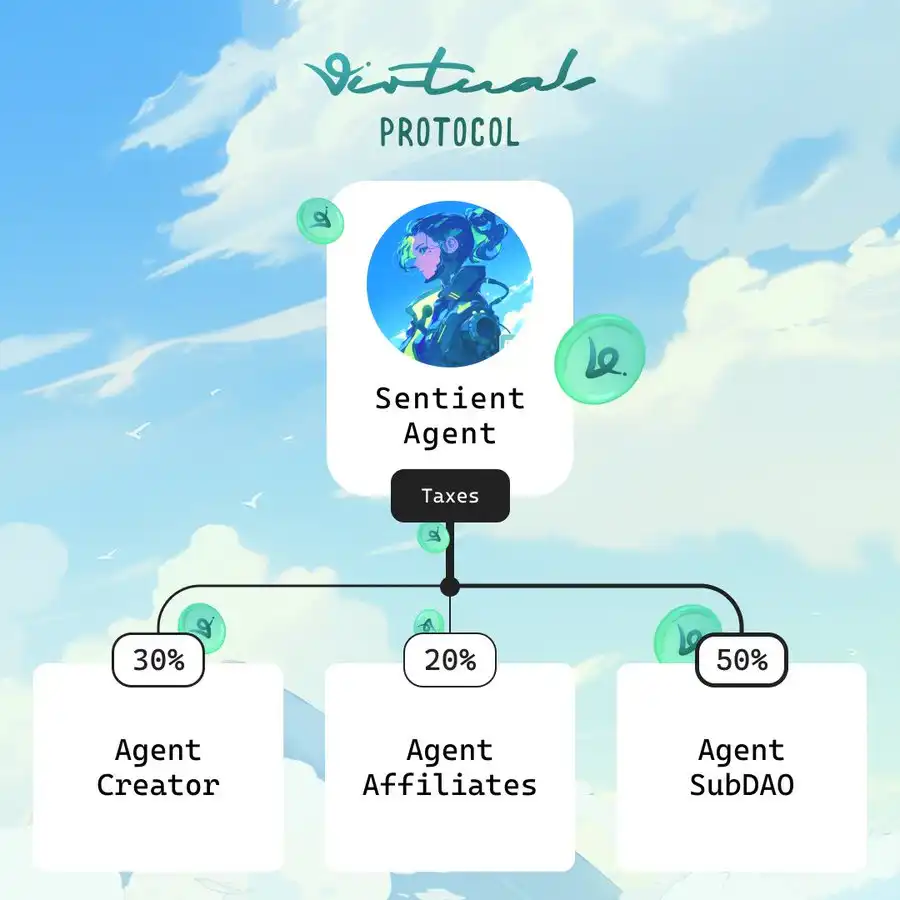
Post-Bonding Tax Distribution: 30% allocated to Agent Creators, 20% allocated to Agent Affiliates, and 50% allocated to Agent subDAO as a reserve fund for future governance decisions;
Creator Reward Distribution: Rewards will be directly sent to the wallet of the proxy deployer.
Agent Affiliates Mechanism: Involves revenue sharing with various trading platforms or interfaces (such as Telegram Bot) within the Virtuals ecosystem. Upon becoming an Agent Affiliate, the platform will receive 20% of the post-bonding tax revenue generated from facilitated trades to incentivize its community and future project planning.
Reason for Upgrade and Impact
Each Virtual token creates a liquidity pool with $VIRTUAL as the paired asset (e.g., AIXBT/VIRTUAL), allowing the platform to accumulate a significant amount of $VIRTUAL as revenue from transaction fees.
However, this revenue cannot be directly liquidated, as doing so may trigger market panic and harm the ecosystem. A decline in the price of $VIRTUAL would also affect the proxy tokens pegged to it. Additionally, mishandling these funds may leave the platform with a substantial tax burden on this unusable revenue.
Therefore, the platform has chosen to utilize this revenue by conducting a buyback and burning of ecosystem tokens.
Beneficiary Token Categories
1. Tokens with Transaction Fee-to-Market Value Ratio:
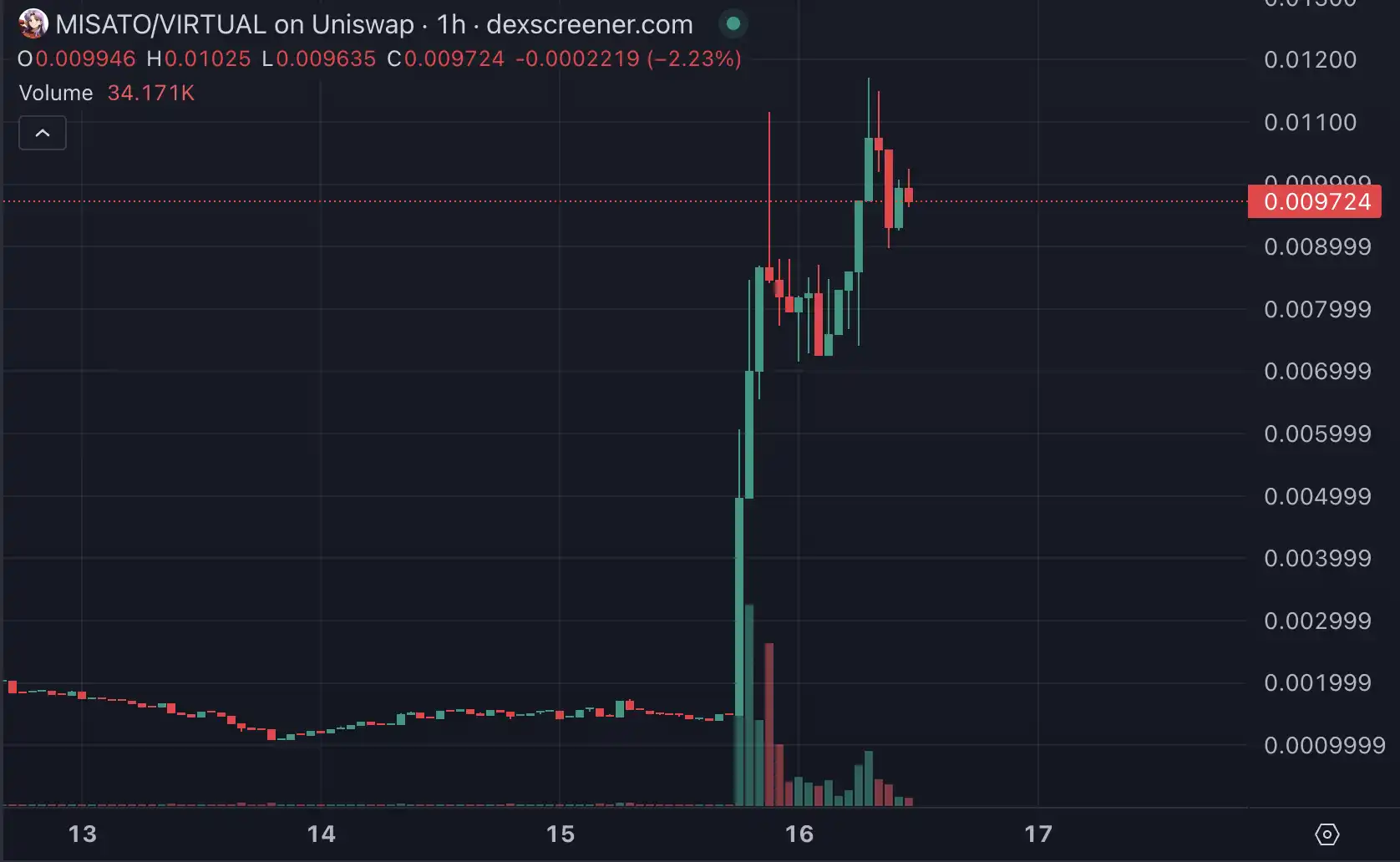
The buyback amount depends on the cumulative amount of transaction fees, so tokens with a large overall trading volume but relatively low market cap will receive a greater proportionate incentive,
such as tokens like MISATO, which saw a significant increase in price due to the buyback announcement.
2. Most Liquidity in Non-VIRTUAL Pairing Pools Tokens
The valuation unit of these tokens (VIRTUAL) is less affected by selling pressure but still benefits from the buyback incentive. For example, $AIXBT actually received around $2.5 million in incentives, but since its primary liquidity is in other pools, it is less affected by VIRTUAL selling pressure.
Affected Groups
1. $VIRTUAL Holders
The significant $48 million selling amount has a notable impact. Previously, the price of $VIRTUAL benefited from the continuous accumulation of fees (equivalent to $48 million in value lock-up).
However, now these fees will be converted to cBTC, starting to exert selling pressure on the market. The positive feedback loop that drove $VIRTUAL's price up has now reversed into a negative loop.
2. Tokens with Only VIRTUAL Pairing Pools or Low Trading Volume
These tokens receive smaller incentives but have to withstand the price pressure from $VIRTUAL selling. The impact is particularly severe on newly issued tokens as they have accumulated less fee income.
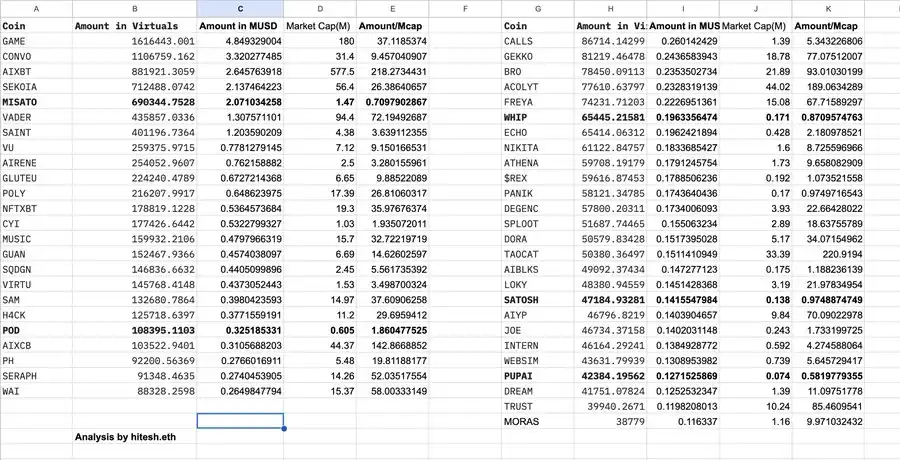
On-chain analyst hitesh.eth analyzed the top 50 tokens based on 30-day Time-Weighted Average Price (TWAP) buyback and burn distribution and found that the buyback pressure on some tokens exceeds their current market value.
How Does the Community View This Buyback?
It can be said that this upgrade has brought stronger value support to the Virtuals ecosystem, but the community has expressed concerns about the updated buyback and distribution model. Some believe that Virtuals chose to sell $VIRTUAL instead of directly burning these tokens. "This approach goes against the best interests of holders and the team, as the team actively created $48 million in selling pressure. For the ecosystem, some of the incentives flowed to agent tokens with liquidity primarily located outside, causing capital outflows from the ecosystem."
The crypto KOL Liam stated that while converting fees to cBTC is the right direction for Virtuals, the platform should significantly reduce the fees to avoid excessive extraction from the ecosystem. Additionally, fee distribution should be standardized based on the token's listing time to put new and old tokens on a level playing field.
However, the view that "buybacks will create significant selling pressure" has been questioned as being inaccurate. This is because these Agent tokens are paired with $VIRTUAL, and buying Agent tokens with $VIRTUAL does not involve selling any $VIRTUAL; it simply adds $VIRTUAL to the liquidity pool. If the liquidity pool is priced in WETH, then $VIRTUAL would first be exchanged for WETH, but that is not the case here.
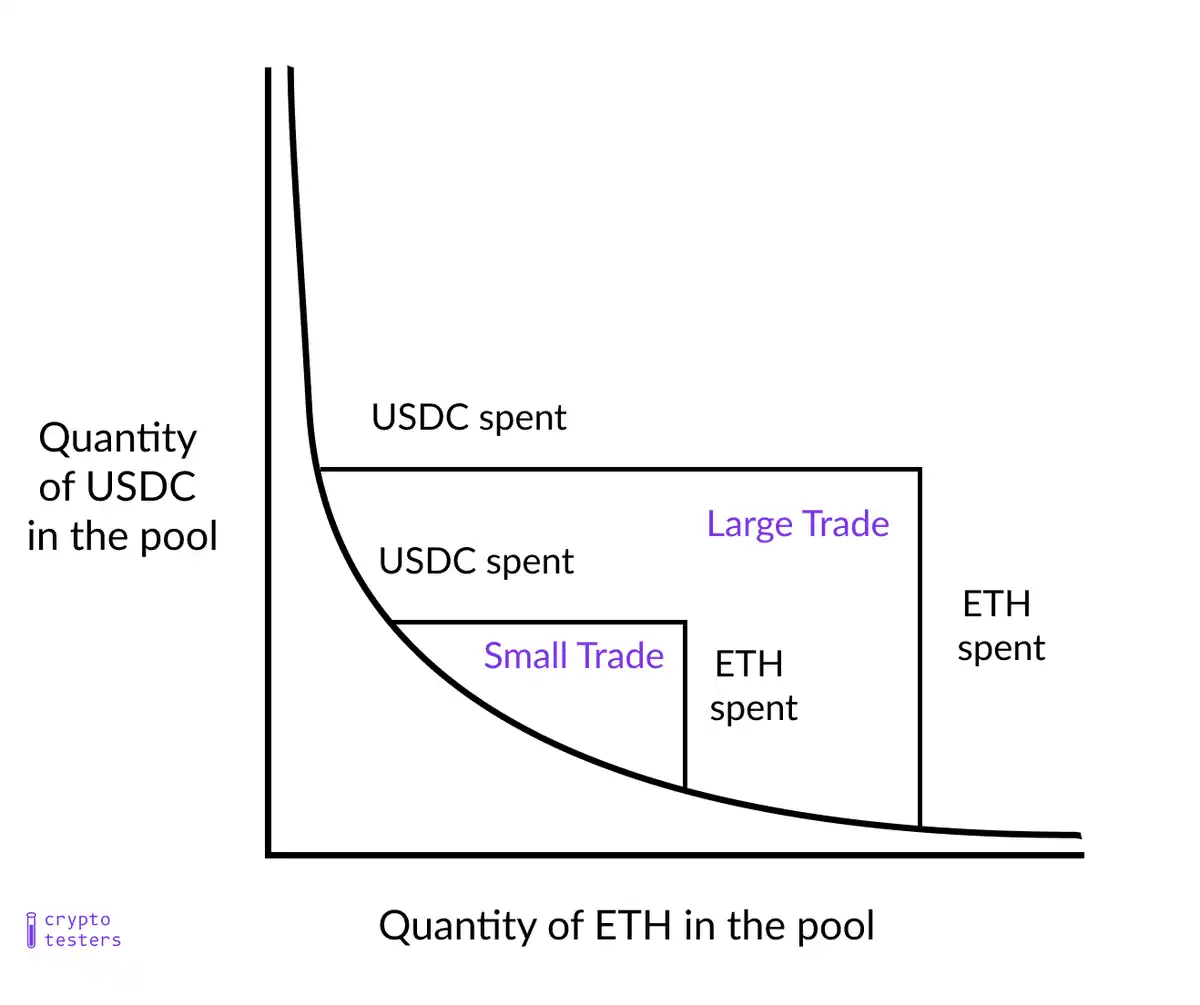
Nevertheless, this will indeed create indirect selling pressure. As the quantity of $VIRTUAL in the liquidity pool increases, the token's value will rise, potentially prompting holders to sell more $VIRTUAL. However, due to the nature of the liquidity pool and price impact, and the fact that the liquidity of many of these tokens is already very low, they cannot directly sell off all the tokens.
Leftcurve DAO member mcSleuth believes that this announcement will not generate direct selling pressure, and the indirect selling pressure is almost negligible, especially considering that the market cap of $VIRTUAL is 36 billion USD and liquidity is very high.
You may also like

The large models in the United States are moving towards closure in the name of security

Morning Report | CoinEx becomes a key hub for Iran to evade sanctions, involving over $3.8 billion in funds; Kalshi seeks a new round of financing, with a valuation potentially rising to $40 billion

From the white-haired stock god to the billionaire fund mogul, the smart people shorting Nvidia are all getting rich using the same framework

Why do cryptocurrency projects always like to change their names?

Global Launch: As predictions become the most scarce asset in the AI era, Manadia is defining the next generation of the value internet

Who is footing the bill for the $64 billion accounting frenzy?
I never expected that the first application of AI x Crypto would be in security auditing

What is your view on Binance's competitive advantages?

ETH has entered a non-consensus phase, and the turning point is approaching!
The shift in the cloud of the air: from despising stablecoins a year ago to the high-profile entry of capital today
The survival dilemma of small and medium exchanges behind the withdrawal anomalies exposed by AscendEX
Why Is Bitcoin Falling Below $60K? 5 Key Market Drivers Explained
Bitcoin has dropped sharply amid ETF outflows, Strategy stock weakness, AI stock rallies, and changing Fed expectations. Explore the key forces driving BTC’s latest correction and what traders should watch next.

Bitcoin vs. Gold in 2026: Which Asset Performs Better in Different Markets?

Morning News | The draft amendment to the People's Bank of China Law aims to clarify the legal status of digital renminbi; South Korea will transfer about 40 unregistered virtual asset service providers to law enforcement agencies
The cryptocurrency industry has entered the "Show Me" era: merely relying on vision is no longer enough

Interpreting the Ethereum Foundation's new structure: Reaffirming self-sovereignty amid institutional trends
Former SpaceX engineer reconstructs the financial execution system using first principles
Standard Chartered Bank sings a 50x rhapsody again, aiming for AAVE to reach 3500 USD
The large models in the United States are moving towards closure in the name of security
Morning Report | CoinEx becomes a key hub for Iran to evade sanctions, involving over $3.8 billion in funds; Kalshi seeks a new round of financing, with a valuation potentially rising to $40 billion
From the white-haired stock god to the billionaire fund mogul, the smart people shorting Nvidia are all getting rich using the same framework
Why do cryptocurrency projects always like to change their names?
Global Launch: As predictions become the most scarce asset in the AI era, Manadia is defining the next generation of the value internet
Who is footing the bill for the $64 billion accounting frenzy?


